
A river landscape?
A river landscape encompasses much more than just the river and its banks. It is a constantly changing system of fauna and flora, banks and meanders, old river beds and adjacent land influenced by a river or stream. Nor is it purely natural. Throughout history, humans have constantly interacted with watercourses and their surrounding land. Through the construction of polders, dykes, locks, etc., communities have left their mark on the landscape. Conversely, natural processes such as erosion and tidal action have also led to changes in transport methods, agriculture, spatial planning, etc. In other words, river landscapes are the result of centuries of complex interactions.

Anyone who wants to gain insight into current issues such as water management, nature restoration, climate change, etc., and wants to find answers to the questions associated with them, should start by understanding these interactions. For example, where and why did floods occur in the past? And how did communities deal with them? What fauna and flora could be found in river landscapes? And why have they disappeared or remained?
Interactions from the past can provide insights and inspiration. However, this requires sources, data, and research. Therefore, the primary focus is on tools that can help describe and study river landscapes over a longer period of time.
The Scheldt Valley
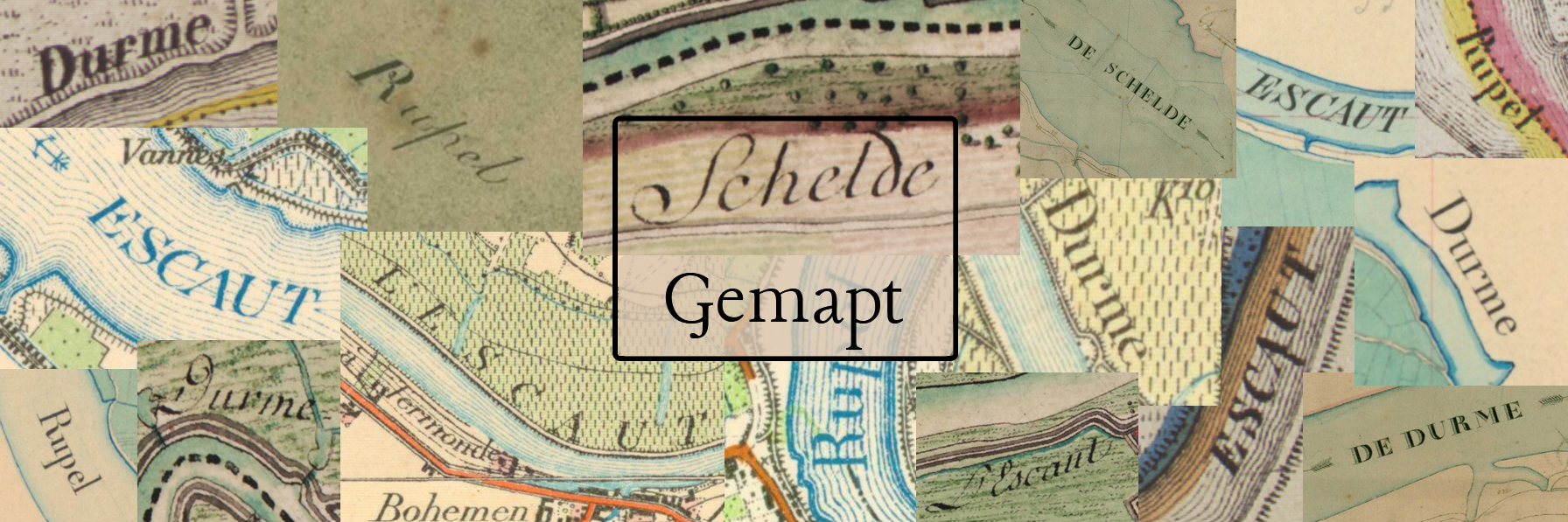
The project focuses on the Scheldt Valley. This river landscape between Ghent and Antwerp includes not only the lower reaches of the Scheldt but also part of the Dender, Durme and Rupel rivers.
This focus is motivated by the unique character of the Scheldt Valley. The tidal action has caused/causes the formation of specific ecosystems. Due to the rising and falling water levels under the influence of the North Sea, some areas are periodically flooded. This is accompanied by the deposition of sediments. The combination of fresh water from inland and salt water from the North Sea creates a breeding ground for fauna and flora that are not found elsewhere, or are found in smaller numbers.

Secondly, the Scheldt (valley) has been an important transport artery and a centre of habitation for centuries. Over time, different societies have left their mark on the landscape, and interaction with the landscape has helped shape those societies. This ongoing interaction makes the Scheldt valley an interesting and meaningful area of research for a variety of disciplines and an ideal case study for designing a research infrastructure.